

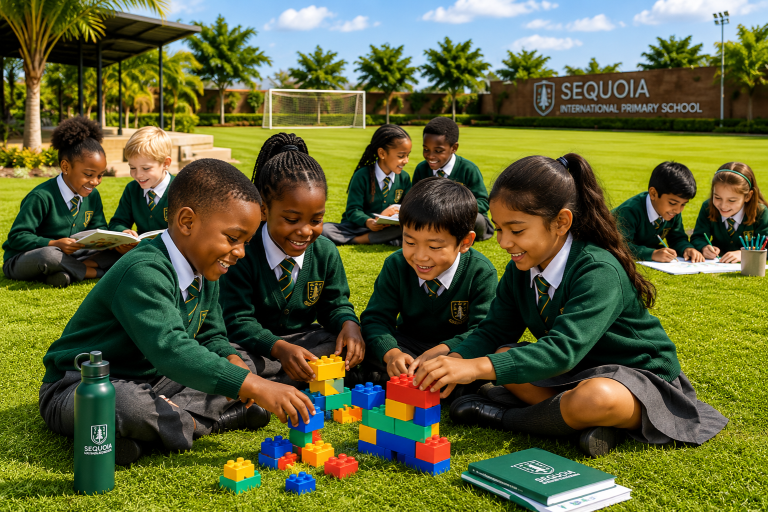
Confidence is one of the most important qualities a child can develop during the primary school years. A confident child is more willing to ask questions, try new activities, participate in class, make friends, solve problems and believe in their ability to learn.
At Sequoia International Primary School, we believe that confidence grows when children feel safe, valued, supported and actively involved in their learning. This is why child-centred learning is an important part of our educational approach.
Child-centred learning places the learner at the heart of the classroom experience. Instead of simply listening and memorising information, children are encouraged to think, explore, ask questions, share ideas and take responsibility for their own learning journey.
What Is Child-Centred Learning?
Child-centred learning is an approach to education that focuses on the needs, abilities, interests and development of each learner. It recognises that children are active participants in the learning process, not passive recipients of information.
In a child-centred classroom, teachers guide, support and encourage learners. They create opportunities for children to participate, investigate, discuss, practise, create and reflect.
This approach helps children understand that learning is not only about getting answers right. It is also about trying, thinking, improving and growing.
Why Confidence Matters in Primary School
Primary school is a very important stage in a child’s development. During these years, children begin to form beliefs about themselves as learners. They may start to think, “I am good at reading,” “I can solve problems,” “I can speak in front of others,” or “I am able to improve when I try.”
When children develop confidence early, they are more likely to enjoy learning and take part in classroom activities. They become more willing to attempt new tasks, even when they are challenging.
Confidence also helps children become more independent. A confident learner is more likely to complete tasks, ask for help when needed and keep trying even when something feels difficult.
Child-Centred Learning Gives Children a Voice
One of the ways child-centred learning builds confidence is by giving children a voice in the classroom. Learners are encouraged to ask questions, share opinions, explain their thinking and take part in discussions.
When children realise that their ideas matter, they begin to feel valued. This helps them become more comfortable expressing themselves.
At Sequoia International Primary School, learners are encouraged to communicate respectfully, listen to others and present ideas with confidence. These communication skills are important not only for academic success, but also for everyday life.
Learning Through Participation
Children often learn best when they are actively involved. Child-centred learning gives learners opportunities to participate in lessons through activities, group work, experiments, reading tasks, projects, presentations and creative work.
This active participation helps children feel more connected to what they are learning. They are not just watching or listening; they are doing, thinking and discovering.
When learners participate regularly, they become more comfortable in the classroom. Over time, this helps them build confidence in their ability to contribute and succeed.
Encouraging Curiosity
Curiosity is a powerful part of learning. When children are curious, they want to know more, explore more and understand more.
Child-centred learning encourages curiosity by allowing learners to ask questions and investigate ideas. Instead of only being told information, children are guided to discover answers through exploration and discussion.
This helps learners develop confidence because they begin to see themselves as thinkers and problem solvers. They learn that asking questions is not a weakness. It is an important part of learning.
Building Confidence Through Problem Solving
Problem solving is an important skill for every child. In a child-centred classroom, learners are given opportunities to solve problems independently and in groups.
This may happen through mathematics activities, science investigations, classroom discussions, creative projects or real-life learning situations.
When children solve problems, they learn to think carefully, test ideas, make mistakes, try again and find solutions. Each successful attempt helps build confidence.
Even when learners do not get the answer immediately, they learn that effort and persistence matter. This helps them become more resilient and willing to face challenges.
Learning From Mistakes
A child-centred learning environment helps children understand that mistakes are part of learning. Instead of fearing failure, learners are encouraged to reflect, improve and try again.
This is very important for confidence. If children are afraid of making mistakes, they may avoid participating or trying new things. But when mistakes are treated as learning opportunities, children become more open to challenges.
At Sequoia International Primary School, learners are supported to develop resilience and a positive attitude towards learning. They are encouraged to keep trying, ask for guidance and believe that improvement is possible.
Supporting Different Learning Needs
Every child learns differently. Some children may learn quickly through reading, while others may understand better through practical activities, discussion, visuals, movement or one-on-one support.
Child-centred learning recognises these differences. Teachers use different strategies to help learners understand and participate in ways that suit their development.
This helps build confidence because children are not made to feel left behind. They receive support, encouragement and opportunities to grow at their own pace.
When children feel understood and supported, they are more likely to believe in themselves.
Developing Independence
Confidence and independence go together. A confident child is more willing to attempt tasks on their own, make decisions and take responsibility for learning.
Child-centred learning encourages independence by giving learners opportunities to make choices, complete activities, manage tasks and reflect on their progress.
This does not mean children are left alone. Teachers provide structure, guidance and support. However, learners are gradually encouraged to take more responsibility for their learning.
This helps children develop important life skills such as self-discipline, organisation, responsibility and decision-making.
Confidence Through Communication
Communication is a key part of child-centred learning. Learners are encouraged to speak, listen, ask questions, explain ideas and work with others.
These opportunities help children become more confident in expressing themselves. They learn how to share their thoughts clearly and respectfully.
Speaking and listening skills also support social confidence. Children learn how to interact with classmates, take turns, listen to different opinions and work as part of a group.
These skills are valuable in the classroom and beyond.
Creative Expression Builds Self-Belief
Creativity gives children another way to build confidence. Through art, music, drama, dance, writing, movement and creative projects, learners can express ideas in different ways.
Not every child expresses confidence through speaking. Some children become more confident when they draw, build, perform, write or create.
Child-centred learning values these different forms of expression. It gives learners opportunities to discover their strengths and feel proud of what they can do.
At Sequoia International Primary School, creativity is encouraged as part of whole-child development.
The Role of Teachers in Building Confidence
Teachers play a very important role in child-centred learning. A supportive teacher helps learners feel safe, respected and encouraged.
Teachers build confidence by listening to learners, recognising effort, giving helpful feedback, guiding improvement and celebrating progress.
In a child-centred classroom, the teacher is not only a person who gives information. The teacher is also a guide, mentor and encourager.
This relationship helps learners feel comfortable enough to ask questions, attempt challenges and grow in confidence.
The Role of Parents
Parents also play an important role in building a child’s confidence. When school and home work together, children receive consistent support and encouragement.
Parents can support child-centred learning at home by listening to their child, asking about school, encouraging reading, praising effort, supporting homework and allowing children to try tasks independently.
Simple encouragement such as “You are improving,” “Keep trying,” or “I am proud of your effort” can make a big difference in how a child sees themselves.
At Sequoia, we believe that education is a partnership between school and home. This partnership helps children feel supported both in class and at home.
Child-Centred Learning Supports Whole-Child Development
A good education should support the whole child. This means helping learners grow academically, socially, emotionally, creatively and physically.
Child-centred learning supports whole-child development because it focuses on more than marks and tests. It helps children develop confidence, curiosity, responsibility, communication, creativity, respect and resilience.
These qualities are important for future education and for life.
Preparing Children for the Future
The world is changing quickly, and children need more than memorised knowledge. They need confidence, adaptability, communication skills, critical thinking, creativity and the ability to solve problems.
Child-centred learning helps prepare children for this future by encouraging them to think independently, participate actively and believe in their ability to learn.
When children are confident, they are better prepared to face new challenges, work with others and continue growing throughout life.
Conclusion
Child-centred learning helps children build confidence by making them active participants in their education. It gives them a voice, encourages curiosity, supports problem solving, values creativity and helps them learn from mistakes.
At Sequoia International Primary School, we use a child-centred approach to nurture confident, curious and capable learners. Through supportive teaching, Cambridge-aligned learning, strong foundational skills and whole-child development, we help children grow academically, socially and emotionally.
If you are looking for a primary school in Lilongwe where your child can feel supported, valued and encouraged to thrive, Sequoia International Primary School provides a safe and caring environment where confidence and learning grow together.