

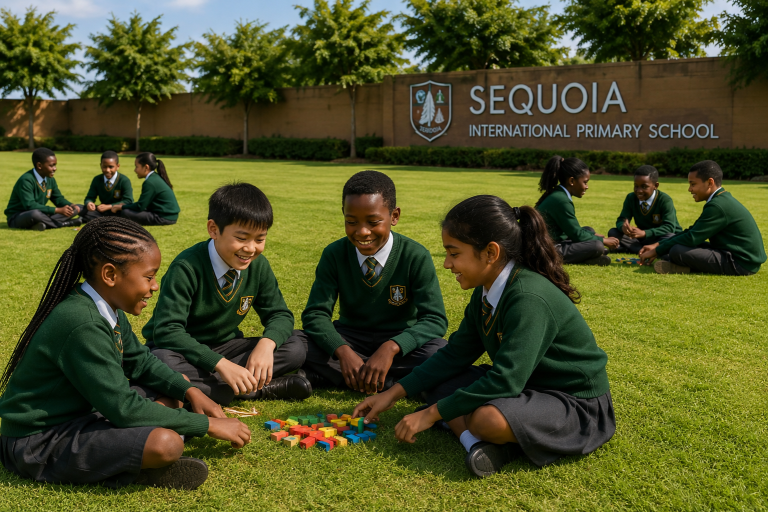
Primary education is one of the most important stages in a child’s life. During these early years, children do not only learn how to read, write and solve mathematical problems. They also begin to develop values, habits, attitudes and behaviours that will shape the kind of people they become.
At Sequoia International Primary School, we believe that academic success and character development must work together. A truly strong education helps children become confident, respectful, responsible, curious and capable learners who are prepared for school, life and the future.
What Is Character Development?
Character development is the process of helping children build positive values, good behaviour, emotional strength and responsible decision-making skills.
It teaches children how to treat others with respect, how to make good choices, how to take responsibility for their actions and how to contribute positively to their school, home and community.
In primary education, character development is especially important because children are still learning how to manage emotions, build friendships, follow routines, respect rules and understand the impact of their actions.
Why Character Development Matters in Primary School
Primary school is where many lifelong habits begin. Children start learning how to work with others, listen to instructions, solve disagreements, care for their belongings, respect authority and take pride in their work.
When character development is part of daily school life, learners begin to understand that education is not only about marks and grades. It is also about becoming a good person.
A child with strong character is more likely to show kindness, honesty, responsibility, self-discipline and perseverance. These qualities support academic success and help children grow into well-rounded individuals.
Building Respect
Respect is one of the most important values children can learn. In a school environment, respect means treating teachers, classmates, staff, visitors and school property with care and dignity.
Children who learn respect are better able to listen to others, follow instructions, participate positively in class and build healthy relationships.
At Sequoia International Primary School, learners are encouraged to respect others and themselves. Self-respect helps children take pride in their work, present themselves well, make safe choices and believe in their own worth.
Encouraging Responsibility
Responsibility helps children understand that their choices and actions matter. In primary school, responsibility may include completing homework, caring for books, arriving on time, following classroom rules and being honest when mistakes are made.
When children learn responsibility early, they become more independent and organised. They begin to understand that success requires effort, discipline and commitment.
Responsibility also helps learners become more prepared for future education because they develop the habits needed to manage tasks and expectations.
Teaching Integrity
Integrity means doing what is right, even when no one is watching. It includes honesty, fairness and strong moral values.
In a school setting, integrity helps children understand the importance of telling the truth, doing their own work, respecting others and making good choices.
When learners develop integrity, they become trustworthy and dependable. These qualities are important in the classroom, at home and later in life.
Developing Confidence
Character development also helps children build confidence. When learners are supported, encouraged and guided, they begin to believe in themselves.
Confidence helps children participate in class, ask questions, try new activities and face challenges with a positive attitude.
A confident child is more likely to attempt difficult tasks, learn from mistakes and continue improving. This is why confidence is an important part of both academic and personal growth.
Promoting Curiosity
Curiosity is one of the core qualities of a strong learner. Curious children ask questions, explore ideas, investigate topics and enjoy discovering new things.
Character development supports curiosity by helping learners become open-minded, thoughtful and willing to learn.
At Sequoia International Primary School, curiosity is encouraged through child-centred learning, inquiry-based activities and classroom discussions. Learners are guided to think deeply, ask meaningful questions and develop a lifelong love for learning.
Teaching Emotional Regulation
Children need support in learning how to understand and manage their emotions. Emotional regulation helps learners respond calmly when they are upset, disappointed, frustrated or excited.
In primary school, children may face challenges such as disagreements with friends, difficult classwork, competition, correction from teachers or changes in routine. Character development helps them learn how to handle these situations in a healthy way.
When children develop emotional regulation, they are better able to focus in class, solve problems, communicate respectfully and build positive relationships.
Building Resilience
Resilience is the ability to keep going even when things are difficult. It helps children understand that mistakes and challenges are part of learning.
A resilient child does not give up easily. Instead, they learn to try again, ask for help, improve and believe that progress is possible.
In education, resilience is very important because every learner will face moments when something feels hard. Character development teaches children that effort, patience and perseverance are part of success.
Supporting Positive Behaviour
Good behaviour creates a safe and productive learning environment. When children understand expectations and values, classrooms become more respectful, focused and supportive.
Positive behaviour includes listening carefully, speaking kindly, following instructions, sharing with others, taking turns, keeping promises and resolving disagreements peacefully.
At Sequoia International Primary School, behaviour is not only managed; it is taught. Learners are guided to understand why good behaviour matters and how their choices affect others.
Character Development and Academic Success
Character development supports academic success in many ways. Learners who are responsible, respectful and confident are more likely to participate in class, complete tasks, listen to feedback and keep trying when work is challenging.
Qualities such as discipline, focus, perseverance and self-confidence help children perform better in their studies.
This means that character development is not separate from academics. It strengthens academic learning by helping children develop the attitudes and habits needed to succeed.
The Role of Teachers
Teachers play a key role in character development. Children learn not only from what teachers say, but also from how teachers speak, listen, correct, encourage and model behaviour.
A caring teacher helps learners feel safe, valued and supported. This creates an environment where children can learn good values through daily interactions.
Teachers help develop character by encouraging kindness, recognising effort, guiding behaviour, supporting reflection and helping learners make better choices.
The Role of Parents
Character development works best when school and home work together. Parents are a child’s first teachers, and the values taught at home strongly influence how children behave at school.
Parents can support character development by modelling respect, encouraging responsibility, praising effort, teaching honesty, setting routines and communicating openly with the school.
When children receive the same message at home and at school, they are more likely to develop strong values and positive habits.
Character Development Through Daily School Life
Character is developed through everyday experiences. It is seen in how children greet others, care for school property, participate in class, respond to correction, support classmates and handle challenges.
Activities such as group work, reading, sports, creative arts, classroom responsibilities, discussions and school routines all provide opportunities for children to practise good character.
At Sequoia, character development is part of the whole school experience. Learners are encouraged to grow academically, socially and emotionally every day.
Preparing Learners for Life
The world needs people who are not only educated, but also responsible, respectful, creative, honest and compassionate. Academic knowledge is important, but children also need strong values to make good decisions and contribute positively to society.
Character development prepares learners for life by helping them build confidence, responsibility, respect, emotional strength and leadership skills.
These are qualities that children will carry with them beyond primary school.
Conclusion
Character development is an essential part of primary education. It helps children become respectful, responsible, confident, resilient and emotionally strong learners.
At Sequoia International Primary School, we believe that education should develop the whole child. Through Cambridge-aligned learning, child-centred teaching, strong values and a safe school environment, we help learners grow academically, socially, emotionally and personally.
If you are looking for a primary school in Lilongwe that values both academic excellence and strong character, Sequoia International Primary School provides a nurturing environment where children can learn, grow and become confident, capable and responsible individuals.